Suitable: the Sartorial Revolution and the Fashioning of Modern Men
(Oxford University Press, 2026)
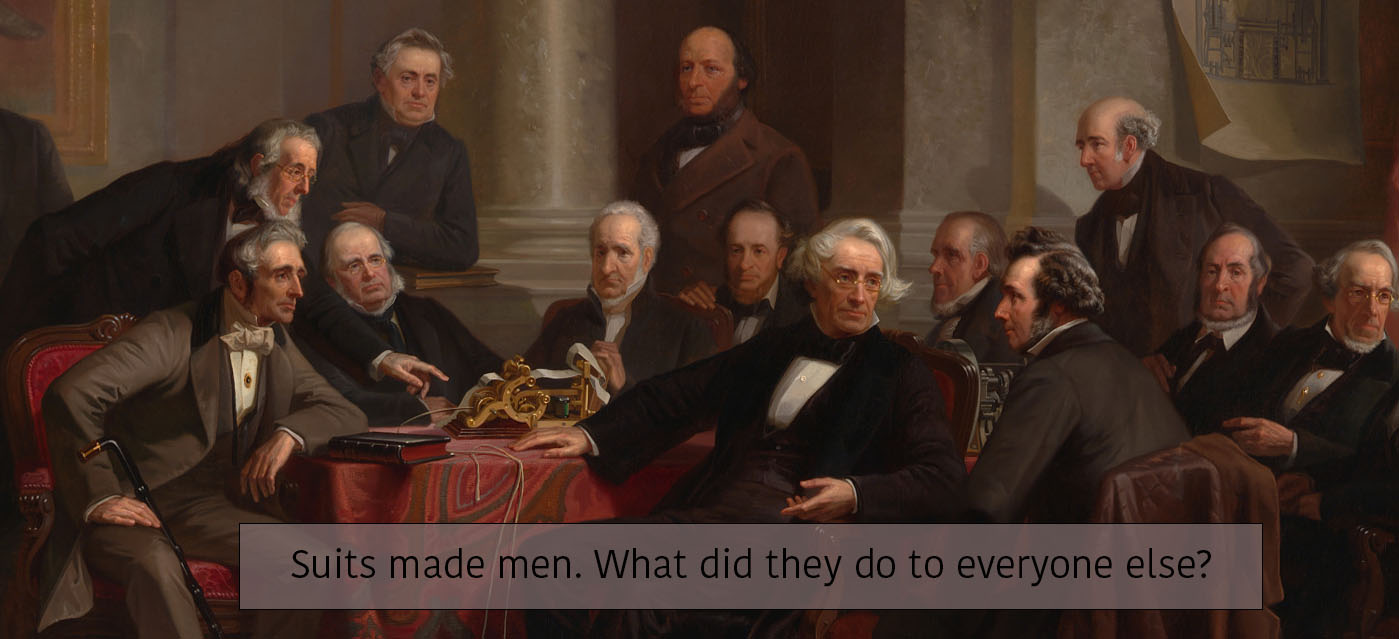
My question for this book was: why do men dress so alike?
Specifically, I wondered, why are men’s suits so plain and uniform, when for women’s fashion, the goal is to be decorative and individual?
This question led me to the origins of the modern suit, which arose in the first decades of the nineteenth century. When the Founding Fathers started wearing plain suits as a symbol of American democracy, they created a new kind of gentlemanly equality…but they also drew a sartorial boundary around white men.
The new fashion for plain suits also created a rift in the way fashion worked in the world. Fashion had been the purview of the upper class of men and women for millennia, but was newly linked to femininity and frivolity, harnessing the three “f-words” together. This “Sartorial Revolution” had two effects: in making fashion women’s business, it yoked women to frivolousness. It also trapped men in a uniform of sartorial restraint.
The modern suit adopted by men in the first decades of the nineteenth century has three main principles: plainness, homogeneity, and stability. Suits are visually plain, they don’t vary much, and they don’t change much over time. Because of this, they resist both collection and analysis. The problem with this resistance to analysis is that the people who adopted suits were white men…..and whiteness and masculinity are other things that have been the “unmarked” categories, which we have had to train ourselves to be able to see. Suits were designed to to be unremarkable, which then hid the power of white men. Contemporary phenomena such as “toxic masculinity” and “heteronormativity” exist, at least in part, because of the invisibility of the suit. We will never be able to see white men (and therefore power) if we cannot see the suit.
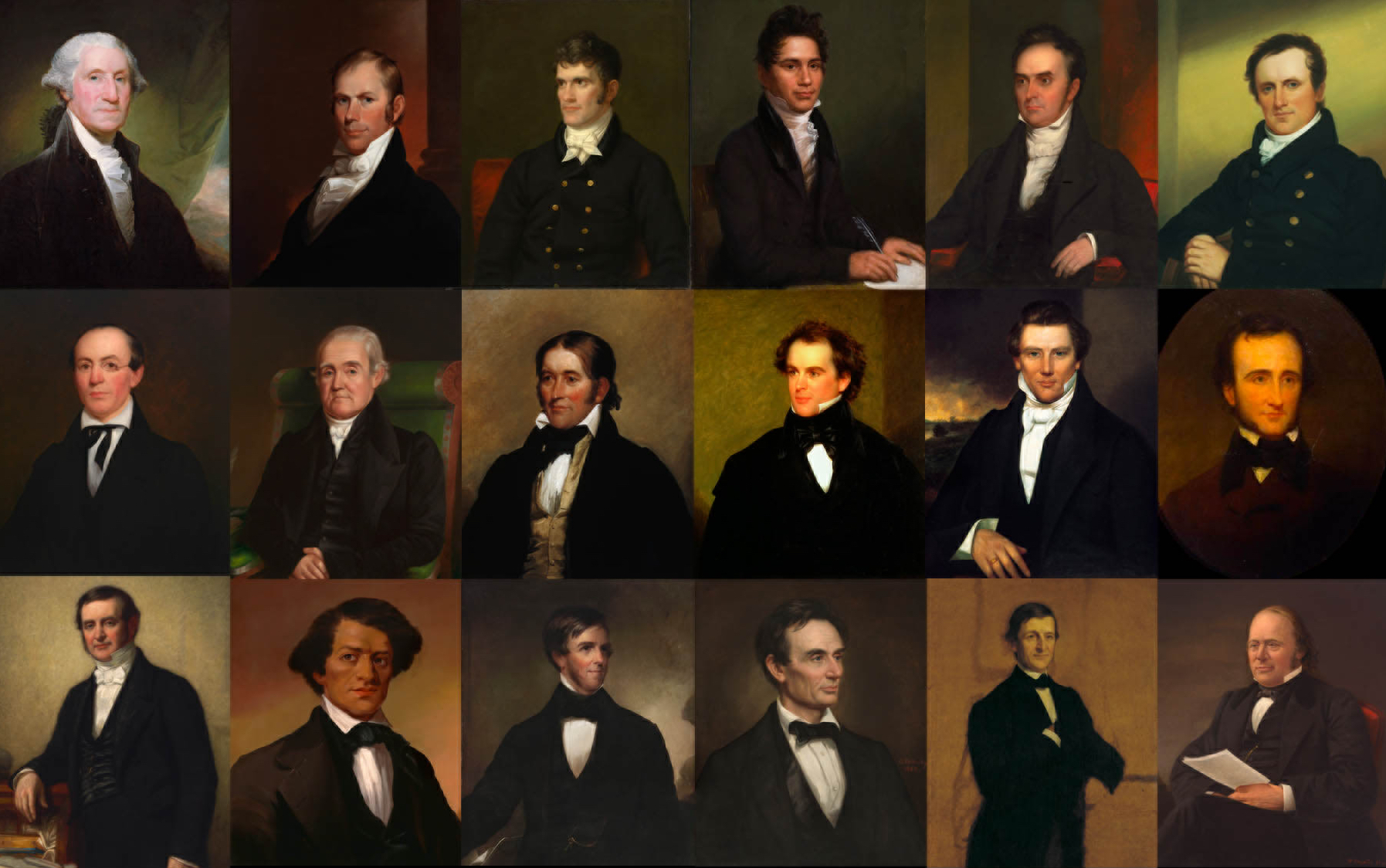
Top row: George Washington, Henry Clay, John C. Calhoun, John Ridge, James Fenimore Cooper. Middle Row: William Lloyd Garrison, Noah Webster, David Crockett, Nathaniel Hawthorne, Joseph Smith, Jr., Edgar Allan Poe. Bottom Row: George Peabody, Frederick Douglass, Oliver Wendell Holmes, Abraham Lincoln, Ralph Waldo Emerson, Jean Louis Rodolphe Agassiz.